
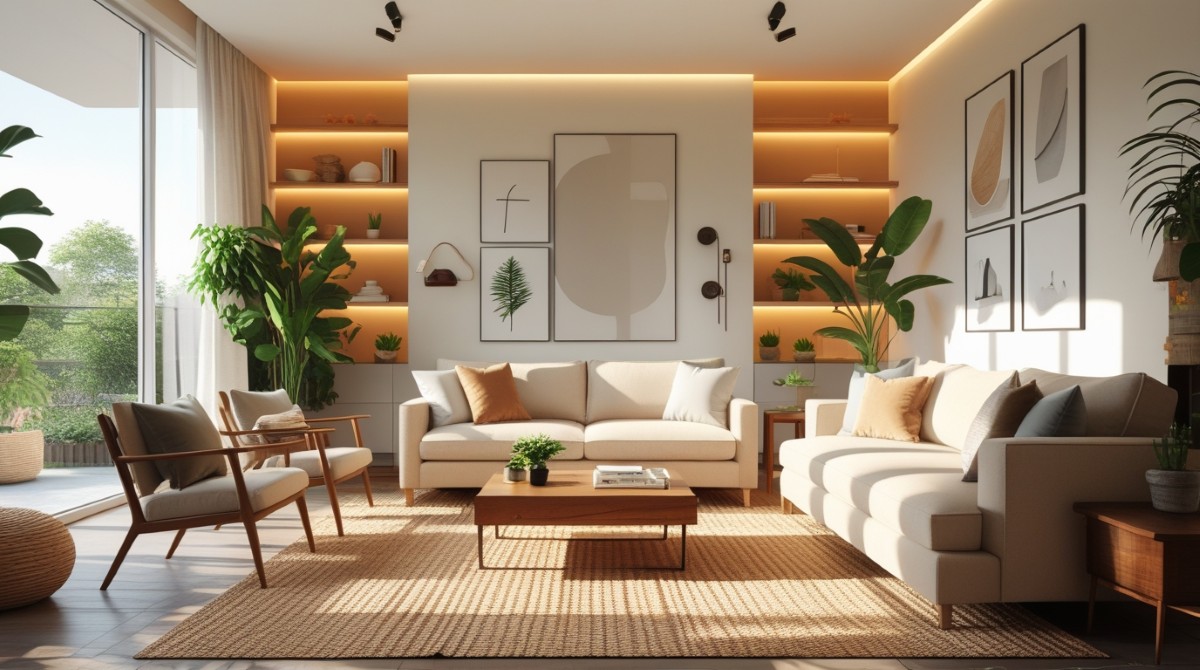
Start your living room makeover with a clear plan. Think about light, furniture placement, storage, and a focal point. Each choice should support the room’s overall look.
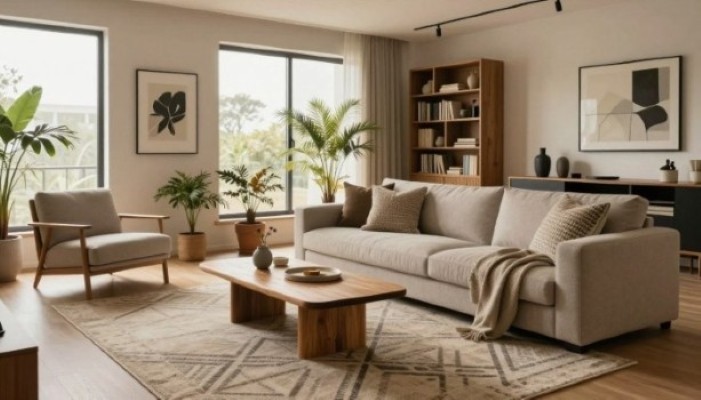
Designers at Studio McGee and Minett Studio Architects + Interiors say to capture natural light. They suggest placing seating for morning and evening sun. Giulietti Schouten Weber Architects and Alison Felstead advise picking your sofa first. This ensures the room’s scale and flow are just right.
Set one goal to guide your choices in materials, color, and decor. For a cozy feel, choose plush seating and layered textiles. Modern spaces need clean lines and a simple layout. Luxury is about refined materials and restraint, while minimalism focuses on essentials and smart storage. Use these goals to narrow your choices and find consistent inspiration as you shop and plan.
Choosing the right sofa and primary seating for comfort and scale
Start by choosing your main sofa first. Design experts like Alison Felstead say it sets the scale and flow of your room. A well-chosen sofa helps the rest of your furniture fit better
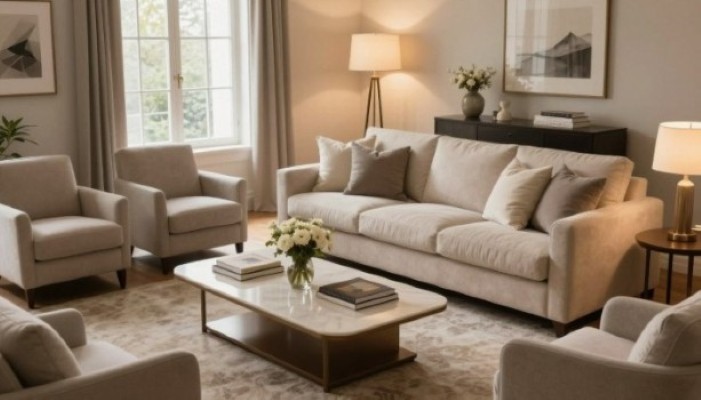
Opt for clean shapes and comfy sizes that won’t go out of style. Use neutral fabrics that are easy to clean. This way, you can change up your look with cushions and throws without buying new furniture.
Think about the visual weight of your furniture. Monica Wilcox and Michael Helwig’s work show how important scale is. For long rooms, consider a sectional or two seating groups to improve flow and conversation.
Custom upholstery can be a smart choice for tailored fits and quality. Local makers like Joybird or Thonet offer great options. They can save you money in the long run because of their durability and repairability.
Creating a focal point that isn’t just the TV
Imagine where you want your eye to land when you walk in. A well,designed focal point in your living room adds balance and purpose. Use furniture, lighting, and textures to create a luxurious feel without focusing on the TV.
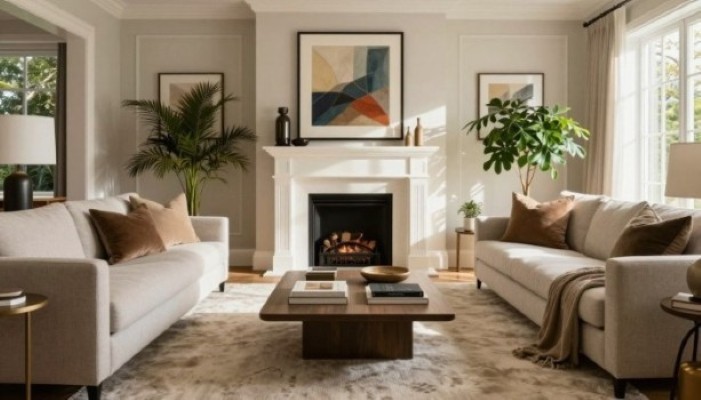
Design around a fireplace, big artwork, or a unique architectural feature. Place two matching chairs or tables on either side of a fireplace for symmetry. Homes & Gardens advises pairing bold pieces with simple ones for a polished look.
Integrate storage with built-in cabinetry to hide electronics. A local cabinetmaker can create custom millwork to hide the TV behind panels or art screens. This keeps the room looking refined. Alix Helps suggests painting a dark wall behind the screen to make it less noticeable.
Choose wall art that looks like architecture. A large canvas or a carefully chosen gallery can anchor your seating. Accent lighting, like picture lights or recessed spots, will highlight the art and draw attention away from clutter or cables.
Rug strategy: size, placement, and texture to define zones
Imagine how a rug frames your seating and ties the room together. The right rug placement can change how you use the space. It can create a formal conversation area or a multi-zone living room for work and play.
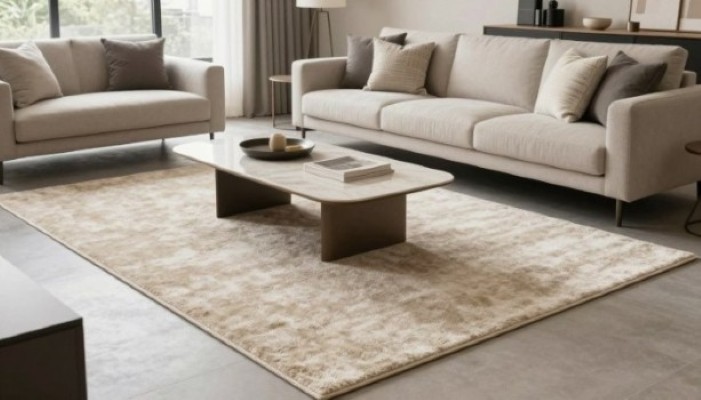
Choosing rug proportions so furniture sits on the rug
Aim to have one,third to two,thirds of your furniture sitting on the rug. This makes the group look like a single unit. In larger rooms, push the rug under all front legs of sofas and chairs for a cohesive look.
For a small living room decor plan, let at least the front legs of major pieces rest on the rug. This rule makes compact spaces feel intentional.
Natural light and window treatments to enhance mood
Putting your living room in the morning sun or evening glow changes its feel. Skylights and highlight windows bring light deep into rooms. This makes furniture placement flexible and enjoyable.
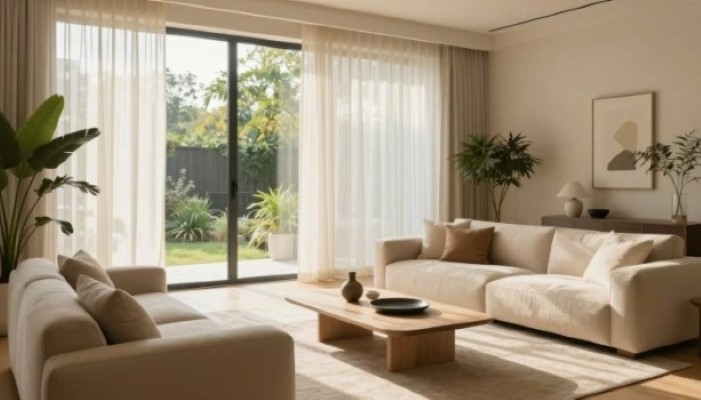
Think of where to place windows as part of your room’s layout. Morning light warms up areas for coffee and reading. Evening light makes it cozy for talking or watching movies. These light patterns guide your decor choices.
Capture morning and evening light with Elevate Your Living Room
Arrange seating to catch sunrise or sunset. A south, or east,facing window brings bright mornings. West,facing windows offer soft evening colors. Small places use mirrors and light-colored rugs to brighten up.
Layered lighting plan for ambiance and function
Good lighting makes a living room inviting. A well,thought,out lighting plan shapes mood, supports tasks, and highlights art or architecture. Think of lighting as a toolkit: each type has a job, and together they create a balanced whole.
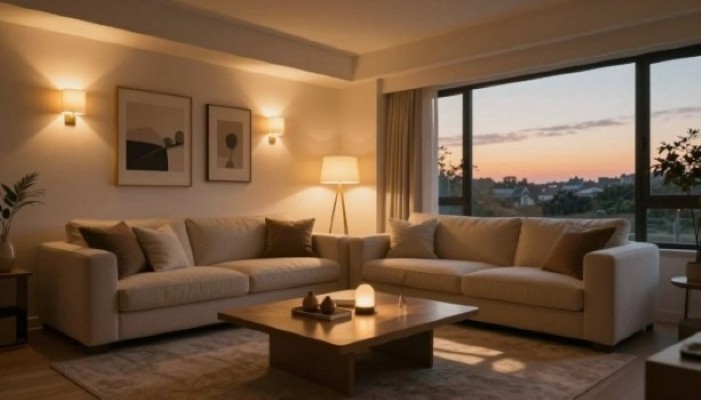
Ambient, task, and accent lighting explained
Ambient lighting gives even, general illumination for movement and socializing. Task lighting focuses on activities like reading or knitting with floor and table lamps that you can aim where needed. Accent lighting draws the eye to artwork, a fireplace, or built-ins with spotlights or picture lights.
Minimum of three light sources: overhead, floor, and table
Designers like Julianne Bull and Nicky James suggest at least three light sources in a room. Use an overhead fixture for ambient coverage, a floor lamp for reading zones, and table lamps to add warmth near seating. This layered lighting approach ensures flexibility for every hour of the day.
Storage solutions and multipurpose furniture for a tidy look
Start by making a list of what you have and how you use the room. A good plan helps you choose the right built,ins and freestanding pieces. This keeps your living room tidy and stylish.
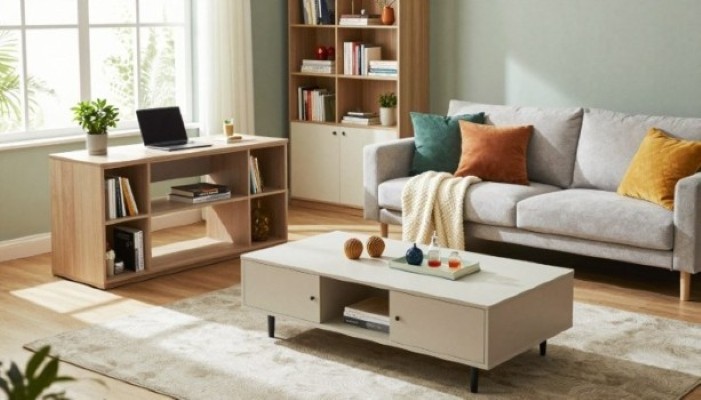
Built-ins and big bookcases give a fancy look while hiding cables. A hidden TV unit or cabinets that match the wall color blend tech into the decor. These choices make your room look better and make decorating easier.
Multipurpose furniture makes every inch useful. An ottoman that stores throws and serves as a coffee table adds seating without taking up more space. Benches with hidden spots are great for narrow areas.
When space is limited, go up. Tall shelves, wall-mounted cupboards, and ladder bookcases free up the floor. IKEA PAX with custom fronts or built-in shelves around windows turn odd spots into neat storage.
Small living room decor and space-saving design tips
Make the most of a small space by focusing on height. Use tall shelves, LED lights, and long curtains to make the room feel taller. Skylights or bright windows can also add light without changing the walls.
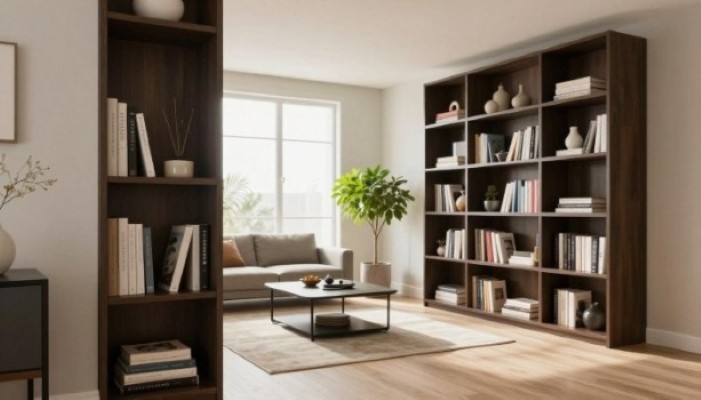
Use vertical space with shelving and tall elements
Install shelves that go all the way up to store books, baskets, and more. This frees up floor space. Use closed cabinets at the bottom to hide clutter and open shelves above for display.
Vertical storage ideas like ladder shelves and wall-mounted media units save space. They reduce the need for big, freestanding furniture.
Choose visually lightweight furniture and unexpected shapes
Look for slim furniture with open legs and glass tops. This keeps the room feeling open. Curved sofas and round coffee tables help with movement and soften corners.
Adding different textures like wool rugs, linen throws, and leather poufs makes the room feel rich. This avoids a crowded feel in small living rooms.Use vertical space with shelving and tall elements
Install shelves that go all the way up to store books, baskets, and more. This frees up floor space. Use closed cabinets at the bottom to hide clutter and open shelves above for display.
Vertical storage ideas like ladder shelves and wall-mounted media units save space. They reduce the need for big, freestanding furniture.
Choose visually lightweight furniture and unexpected shapes
Look for slim furniture with open legs and glass tops. This keeps the room feeling open. Curved sofas and round coffee tables help with movement and soften corners.
Adding different textures like wool rugs, linen throws, and leather poufs makes the room feel rich. This avoids a crowded feel in small living rooms.
Contemporary and modern living room design cues
Think about calm, deliberate choices for your room. Contemporary style loves clean lines and a simple color scheme. Choose pieces that work well together but don’t match exactly.
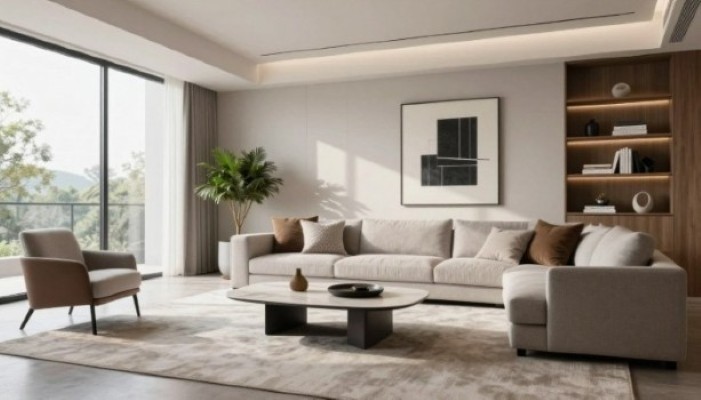
Small details can make a big difference. Add fine trim, subtle piping, and brass or matte,black hardware for a touch of luxury. Make sure furniture fits the room well, keeping it open and easy to move around.
Clean lines, balanced scale, and intentional minimalism
Opt for furniture with simple shapes and avoid too much decoration. A low sofa and a matching console keep the room balanced. Each piece should have a purpose in minimalist decor.
Layering texture, color, and personal touches for warmth
Begin with a simple color scheme and add layers. Warm decor like soft neutrals and rich tones creates a cozy feel. This method lets you play while keeping the room’s look unified.
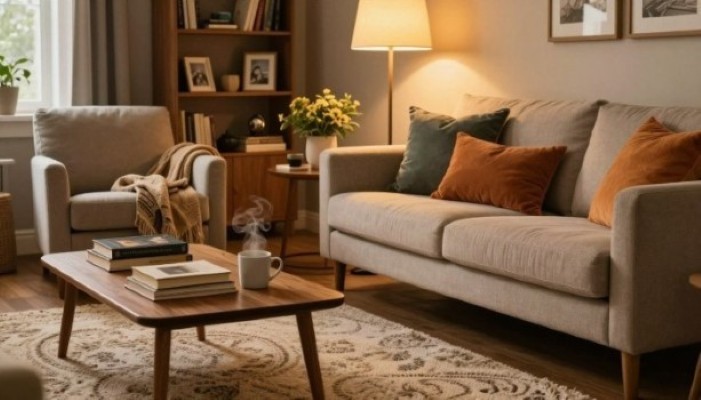
Layering texture means mixing different materials. A wool rug, velvet pillows, and linen drapes add depth. Small details like trim and brass hardware enhance the look.
Add personal touches to make your space unique. Display framed photos, travel souvenirs, or a vintage clock. Michelle Gage suggests mixing old and new items for a cozy feel.
Balance soft items with solid ones for contrast. Pair silk or velvet with wood, metal, or ceramics. A large art piece or vase can make a big impact without clutter.
Styling tips for coffee tables, sofas, and wall art
Begin with a simple plan to ensure each piece has its place. Good living room styling tips mix comfort with polish. Use proportion and function to guide your choices. Aim for a chic living space that feels welcoming, not too perfect.

Coffee table styling: trays, books, florals, and functional items
Start with a large tray to hold items in place on soft surfaces. Choose two or three books of different sizes to add height and interest. Add a small floral or sculptural piece for a fresh look. Keep one or two functional items, like a remote caddy or coasters, for balance.
Sofa styling ideas: cushion mix, throws, and scale balance
Mix cushion sizes for depth: pair two larger back cushions with one smaller accent pillow. Use different textures like linen, velvet, and wool for contrast. Add a layered throw for a natural look. Make sure the scale of cushions matches the sofa size.
Scandinavian, boho, and minimalist motifs to consider
Begin by picking a mood for your living room. A neutral look brings calm and flexibility. Boho or minimalist styles let you play with texture and size. Start with small changes and add big pieces like a sofa for balance.
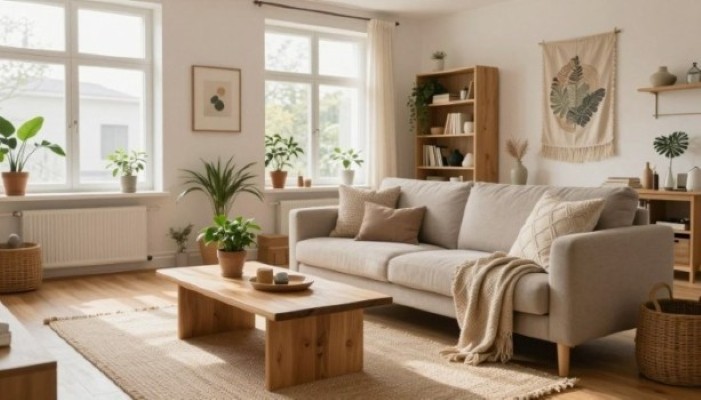
Scandinavian living room design: neutral palettes and natural materials
Scandinavian design is all about light colors and natural materials. Use wool rugs and linen drapes for a warm, simple look. Choose oak or ash furniture with clean lines and soft throws for coziness without clutter.
Boho living room ideas: layered patterns, plants, and eclectic finds
Boho style is about mixing patterns, textures, and unique items. Add rattan chairs and macramé for depth. Display personal items and vintage finds to make your space special.
Trendy yet timeless: decor trends 2026 and luxury finishes
You want a living room that feels fresh now and looks great years later. Focus on classic materials, balanced scale, and small details that show quality. This way, your space stays on trend without falling for fleeting fads.
Warm cozy decor and quiet luxury principles
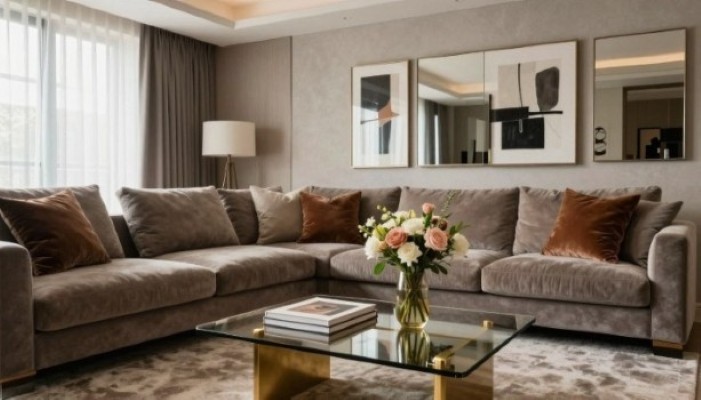
Start with a neutral base and add texture for warmth. Soft wool rugs, brushed linen drapes, and plush velvet cushions invite you in quietly. Quiet luxury shines through in subtle craftsmanship, like custom millwork and refined hardware.
Luxury living room design: materials, scale, and detail choices
Choose materials that last, like marble or stone for a fireplace. Solid,wood furniture, brass fittings, and high,density foam add comfort and durability. Make sure scale is generous but feels human, balancing big sofas with the right tables and lights.
Which 2026 trends to adopt and which to avoid for longevity
Go for trends that make your life better, like layered lighting and sustainable materials. Choose statement pieces from brands like Flos or Artemide for both function and style. Warm cozy decor comes from textiles and lamps, not loud colors.
Indoor plants, soft lighting, and creating a comfortable setup
Make your living space warm and inviting with simple choices. Start by grouping plants like snake plants, pothos, and ZZ plants. These plants do well in low light. Place taller pots in corners and smaller ones on shelves for interest.

Use different lights to change the mood. Aim for three light sources in each area for easy switching. Accent lights add depth to your space, making it cozy and welcoming.
Arrange seating for talking, TV watching, and family time. Set sofas and chairs in a way that encourages conversation. Make sure TV viewing is comfortable from the main seating area. Choose durable fabrics and smart storage for a family room that lasts.
Choose the right sofa as your starting piece
Start by picking your sofa. It’s the anchor of the room, setting the scale and comfort. Focus on proportion and comfort first to guide your other furniture choices.
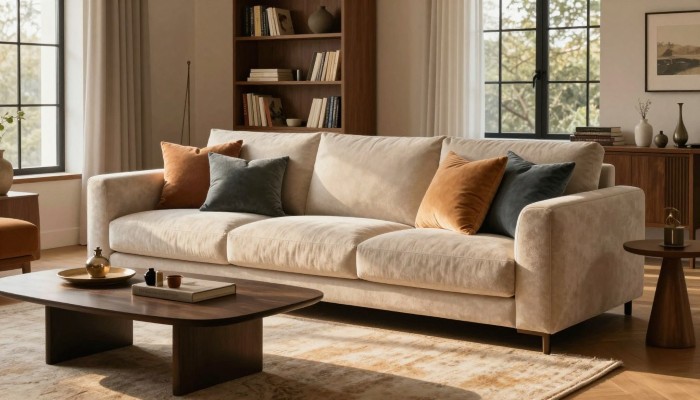
Test the sofa’s seat depth and cushion firmness. For lounging or watching movies, go for deeper seats and softer cushions. For sitting upright, choose shallower seats with firmer cushions.
Match the sofa’s size to the room’s size. This prevents it from overwhelming small spaces or feeling lost in large ones.
Think about custom upholstery for a perfect fit. Local makers like Nicole Peter Studio offer tailored options. They provide strong frames, specific fills, and fabric choices that last longer
Create a focal point that isn’t just the TV
Decide what catches the eye when you enter the room. A focal point can make your space look more refined. Choose a fireplace, large artwork, or architectural detail to set the mood for a modern living room.
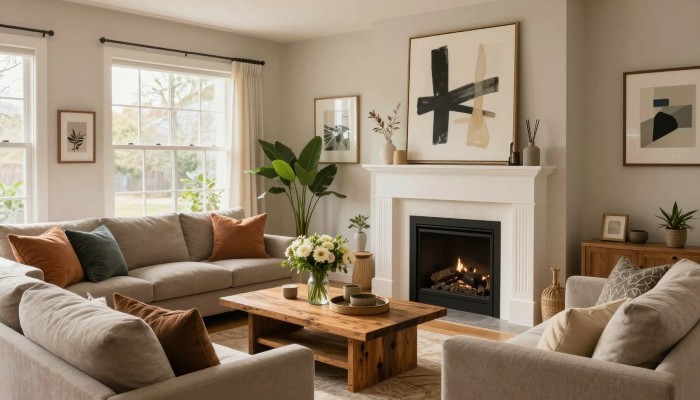
Make the fireplace or artwork the anchor
A marble or stone,clad fireplace can anchor the seating area. It adds a sense of permanence. Minett Johnson and Meet West Studio suggest stone surrounds for framing seasonal decor.
If you prefer art, choose a large piece that leaves space around it. Homes & Gardens advises large artwork for drama without clutter.
Camouflage or disguise the TV
Integrate the TV into millwork or custom cabinetry to blend it into the room. Alix Helps recommends dark walls or art-mode screens to reduce the TV’s dominance. Flanking the screen with shelves or objects can also soften its rectangular shape.
Layer lighting for mood and function
Think of lighting as a system that supports your lifestyle. Good layered lighting combines soft lighting with practical fixtures. This makes your space calm at night and useful during the day. Choose warm color temperature, CRI 90+ bulbs, and LED dimmers that fit modern designs.
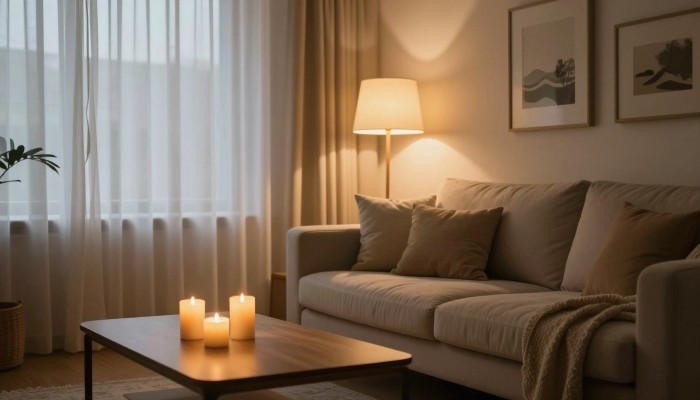
Ambient light gives a general glow. Use ceiling fixtures, recessed cans, or a large pendant for even light. Add task lamps near reading spots for focused light. Accent lights highlight art and shelves, adding depth to the room.
Anchor zones with the right rug
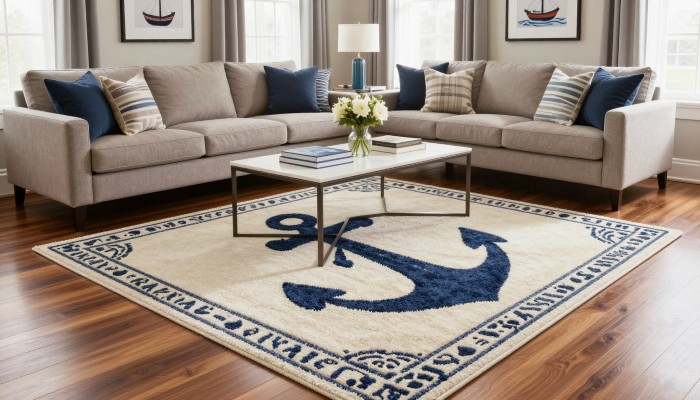
Choosing the right rug can transform your room’s feel and function. A well,placed rug acts as an anchor, tying furniture together. It gives visual weight to seating areas. Think of rugs as tools that shape traffic flow, acoustics, and mood in your living room.
Choose proportion and pile carefully
Follow a simple rug size guide: leave a margin of exposed floor around the edges. Allow one,third to two,thirds of furniture to sit on the rug. This keeps the space grounded without feeling crowded.
Pick pile according to use. Soft,pile rugs suit floor seating and add warmth. Low,pile or flatweave options work better under heavy traffic and in homes with pets or high moisture.
Use rugs to define multiple zones
In open,plan layouts, use rugs to create clear zones for lounging, dining, and conversation. Match tones or patterns across zones to avoid visual fragmentation. This maintains harmony in your living room decor ideas.
Place the sofa and primary chairs so their front legs rest on the rug. This anchors the seating and improves flow between areas. Designers recommend consistent color schemes for practical guidance.
Balance scale, proportion, and layout
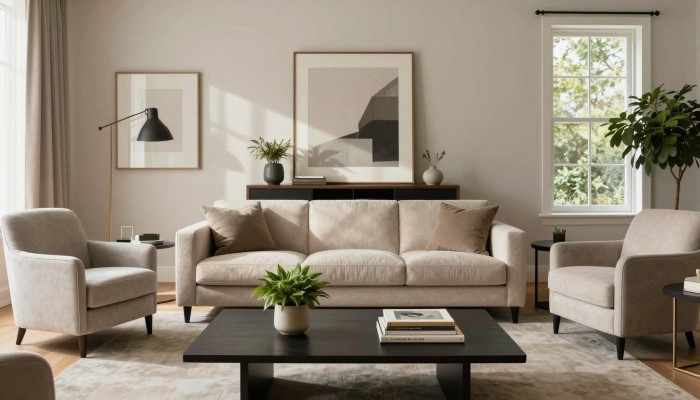
Make your living room calm and intentional by focusing on scale and proportion. Designers at Homes & Gardens say to avoid pieces that are too big or too small. Aim for a balanced layout so every area looks intentional and inviting.
Choose fewer, larger pieces
Go for a few big items instead of many small ones. A big sofa and a couple of large chairs make a room feel grand. This style works well for modern and minimalist decor by keeping things simple and open.
Mind visual weight
Think about how heavy items look. If your seating is heavy, balance it with a light coffee table. Use darker woods or metal on lower pieces and lighter upholstery on seating to spread out the weight.
Create symmetry or considered asymmetry
Symmetry makes a space feel calm and formal. Mirror chairs or match lamps for this look. For a relaxed feel, choose asymmetry. Pair a single armchair with a tall plant or vertical shelving to balance a long sofa.
Practical spacing and anchors
Maximize storage and multipurpose furniture
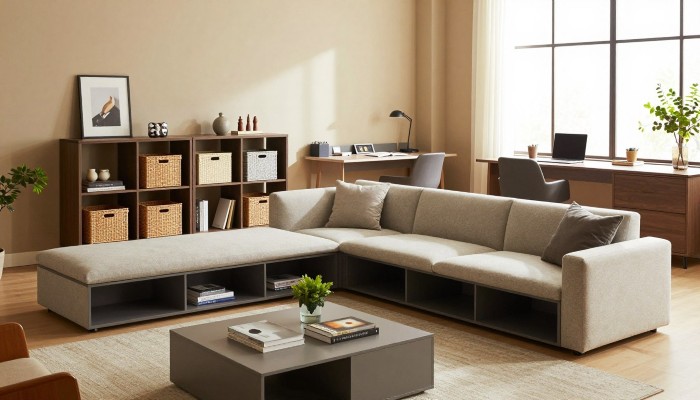
First, think about how you use your living room and what you need to store. Having a plan helps you add storage without making the room feel cramped. Think of storage as part of the design, not an afterthought. Built-ins and smart cabinets can look intentional and fit perfectly.
Plan built-ins and concealed storage
When planning built,ins, consider wiring, HVAC, and windows. This way, installers won’t interfere with important systems. Use media cabinets with cable management to hide cords and devices. Hidden storage in benches, coffee tables, and sideboards keeps things tidy while keeping your space looking good.
Choose multipurpose pieces
Look for furniture that serves more than one purpose. Ottoman bins, sofa beds, and nesting tables offer flexibility. Brands like IKEA and West Elm have modular sofas and storage beds that grow with you.
Use vertical space for storage
Use the wall for storage to keep floors open. Tall, slim shelving and wall,mounted cabinets make the most of vertical space. Sconces or wall lamps save floor space, making your room feel bigger.
Apartment living room ideas
In small apartments, turn closets into storage with systems like IKEA PAX. Add quality fronts for a better look. Use under,stair areas, narrow ledges, and the backs of doors for extra shelves. These ideas turn unused spaces into useful storage.
Practical tips to finish
Go for adjustable shelving to grow with your collection. Measure before buying to avoid oversized furniture. Mix open shelving for display with closed cabinets for clutter. This way, your storage living room will look great and be functional every day.
Conclusion
Expert advice helps you find the right living room style. Begin with a solid plan and choose a big sofa as your centerpiece. Make sure your TV isn’t the main focus.
Layer your lighting and pick the perfect rug. Add furniture that serves more than one purpose. This way, your room will be as useful as it is beautiful.
For small spaces, use vertical storage and furniture that fits well. Designers like Ann Lowengart and Donna Hoffman show how to make small rooms feel big. They use rhythm, proportion, and repetition to avoid clutter.
Homes & Gardens and top designers stress the importance of quality and symmetry. Choose durable pieces and mix textures. Keep your decor simple and stylish.
Follow this guide to create a cozy and modern living room. Focus on comfort, layering, and personal touches. With these steps, your living room will be a reflection of your style and a place of inspiration.